Article Summary
Federal rules for 2027 and 2028 require Arizona, California, and Nevada to cut Colorado River deliveries by 1.25 million acre-feet annually. Agents in Los Angeles, Las Vegas, Phoenix and San Diego say buyer concern is limited so far, but utility and new build costs could rise. AI Summary
Since the height of the pandemic housing market boom, markets across the Sun Belt region have witnessed an influx of housing inventory. But as some markets have been flooded with inventory, the region’s water supply has begun to dwindle.
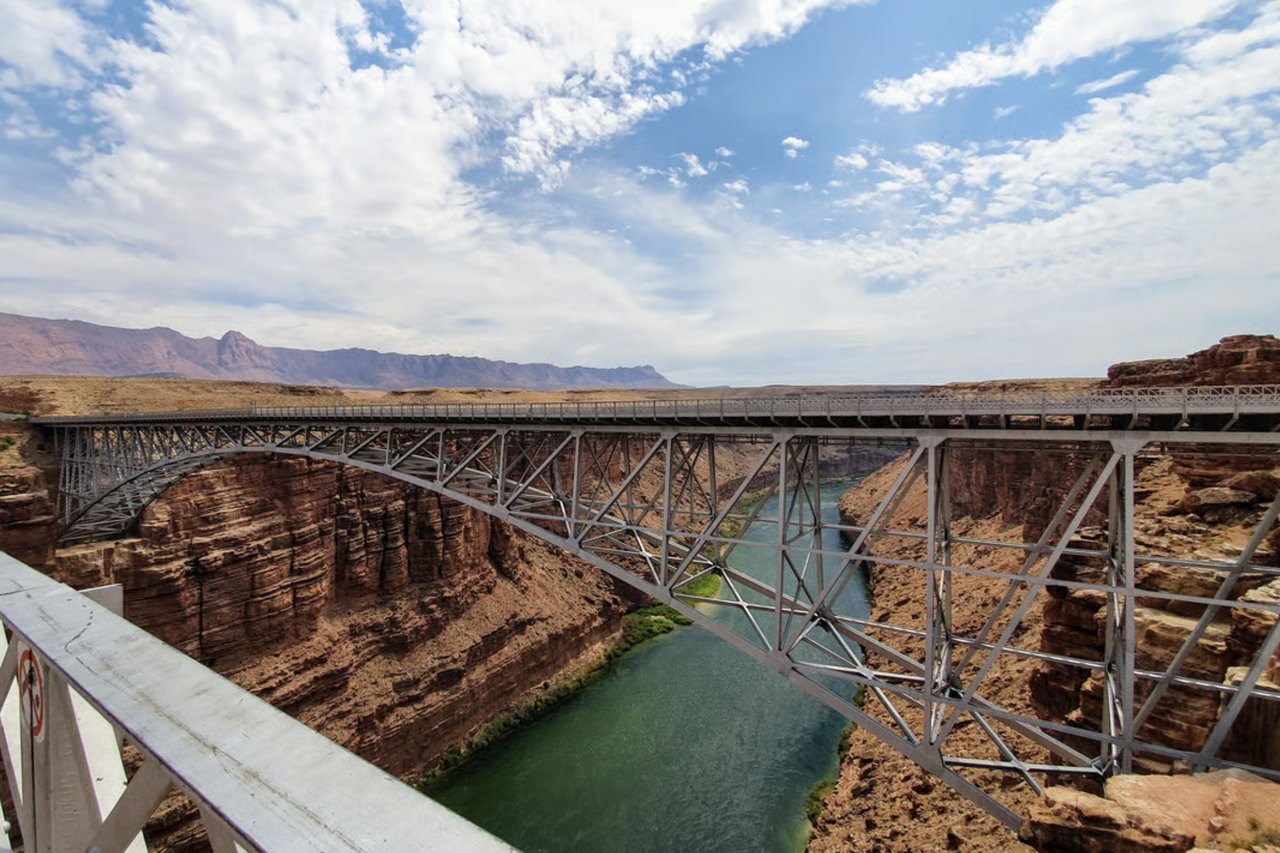
Due to this, in mid-August, the U.S. Department of the Interior and Bureau of Reclamation finalized new operating rules for the Colorado River for 2027 and 2028. Water from the Colorado River is governed by the 1922 Colorado River Compact, which divvied up the flow of the Colorado River between upper-basin states, such as Colorado, Utah, Wyoming and New Mexico, and lower-basin states, which include California, Nevada and Arizona.
The modernization of an historic agreement
At the time of the compact’s negotiation, the annual flow of the 1,450 mile long river was estimated to be 15 million acre-feet, but it was later discovered that the river’s annual average flow is closer to 12.5 million acre-feet. Since 2020, however, the river’s average annual flow has dropped to 10.2 million acre-feet.
Under the terms of the new operating rules, the three lower basin states must reduce their Colorado River deliveries by 1.25 million acre-feet per year. According to the rules, Arizona must reduce by 760,000 acre feet per year, California by 440,000 acre-feet and Nevada by 50,000 acres feet. These reductions will occur in both 2027 and 2028.
These reductions come after the Colorado River basin experienced its lowest observed snowpack on record during the winter of 2025 to 2026. As a result of this, both Lake Mead and Lake Powell fell to record-low levels. The combined storage in the two reservoirs is at its lowest level since Lake Powell began filling in the 1960s, with the two lakes at 28% and 24% capacity, respectively, as of July 2026. Overall, in July, the entire Colorado River system was only about 33% full.
Supply and demand
Despite the reduction in water supply, agents serving major metro areas in the three lower basin states say that very few clients have expressed concern about these changes.
“I have not had this come up as a topic of conversation yet,” Michael Nourmand, the president of Nourmand and Associates Realtors, said. “It isn’t really being talked about by Realtors and clients are not talking about it yet.”
Nourmand added that at least for his clients in the Greater Los Angeles metro area, while water restrictions are certainly something people are aware of, consumers are more preoccupied with other challenges like homeowner’s insurance.
A few hours away in Las Vegas, Bob Hamrick says that for local buyers, who are well aware of all of the various water conservation efforts the state and local governments have put in place, water supply is a non issue, but for out of town buyers there is a bit of a perception issue.
“Every buyer that flies into Las Vegas and flies over Lake Mead and sees the visual of how low the water is, is definitely asking questions,” Hamrick, the CEO of Coldwell Banker Premier Realty, said.
In the Phoenix area, which already has provisions in place like 100-year water supply requirements for new builds, agent Henry Padilla said his clients do express concerns about water availability and supply, but the new Colorado River water allotments have yet to become a hot topic of conversation. In order to help better serve his clients, Padilla, who is brokered by The Real Brokerage, said he does his best to stay on top of the water situation in the areas he serves.
“The headlines would have you believe that we are running out of water, but there are plenty of safeguards in place and these cities have back up water to cover them for years,” Padilla said. “We would have to be completely cut off from the Colorado River to even have to tap into that storage.”
Rising costs
However, Padilla said with these water allotment changes there is a strong chance that water bills may start to rise. With affordability already a challenge for many homebuyers across the country, in the Phoenix area, when working with buyers on tight budgets, Padilla will ask the sellers for copies of their recent utilities bills so the buyers can get a sense of what their monthly costs would be.
“The market here is slower than it once was so some buyers are able to get concessions from the seller such as help with closing costs and these savings can help cover rising utilities if those costs end up going up,” Padilla said.
In San Diego, Compass agent Twana Rasoul said consumers, like those in the LA area, are primarily concerned with insurance when considering the affordability of a property, but with water bills on the rise in the metro area he feels they may soon be examining other costs.
“For a lot of buyers, water and utilities don’t play as big of a factor as things like mortgage payment, insurance, HOA fees or taxes that are typically part of the monthly payment calculator mortgage lender helps them with,” Rasoul said. “What I usually see is they get into the home for six or 12 months and then they get a feel for how their water bill will impact their cost of living.”
This, Rasoul said, usually leads them to look for ways to reduce their water usage, which is a primary reason features like water efficient landscaping are gaining popularity among savvy homebuyers.
“Over the past few years I’ve noticed, especially with my investor clients, that they are looking for ways to minimize water usage on the exterior of the property,” Rasoul said. “When they see exterior landscaping that looks great and needs little to no water and maintenance, that catches their eye first.”
Brokers in Southern Nevada said water efficient landscaping is something their buyers are also looking for. The state government provides homeowners with credits for making their landscaping water efficient.
“There are credits if you go from grass to rock or turf with your landscaping and this has been in place since the early 2000s,” Juan Martinez, a broker at Century 21 AMERICANA, said. “Under the Water Smart Landscape Rebate Program, residential properties get $5 per square foot of grass removed and replaced with desert landscaping for the first 10,000 square feet and then $2.50 per additional square foot, so it is not an insignificant amount of money.”
In addition to the credits homeowners can receive for swapping to water efficient landscaping, Martinez also noted that water bills rise exponentially the more water you use, encouraging consumers to find ways to be more water efficient.
Besides rising water bills, Hamrick said new construction in the state has also been impacted by the area’s water conservation efforts, not because there isn’t enough water, but because of how closely new construction is monitored based on water supply management efforts.
“Where we have seen a significant financial impact is on new single family homes thanks to rising permit fees and required contributions to certain water finds,” Hamrick said. “This is a huge affordability issue as the permit fees and the hook-up fees for not only water, but all utilities have increased significantly and there is no way those increases are not being passed down to the consumer in some way.”
Buyers still want in
Despite the potential impact on affordability thanks to rising water bills, agents in these lower basin metros don’t feel the changes to the Colorado River water allotments will have much of an impact on housing demand in these areas.
“The perception from the outside might be that we don’t have water, but the reality is so different that I don’t see it impacting demand,” Hamrick said. “The reality is that our conservation efforts have been so significant and in place for so long prior to these cuts that we are doing extremely well on conservation. There are definitely more conservation efforts already taking place.”
Hamrick said he makes sure his agents are well educated about the area’s water supply and the strategies and programs in place to ensure Las Vegas has plenty of water for decades to come.
“Our agents are able to overcome objections or concerns from buyers by explaining the reality of the situation,” he said.
In Phoenix, which is seeing an influx in businesses, Padilla doesn’t believe potential water supply challenges will be enough to stem the flow of people searching for homes in the area.
“I feel the economy as a whole is going to overshadow this and continue to bring people to the area,” Padilla said. “These companies wouldn’t be coming here if they were afraid we were going to run out of water.”
Looking ahead, in San Diego, Rasoul believes water supply may be something people consider when looking for a property.
“I think it is going to be a factor and right now, maybe it is not as big of a conversation as it should be,” Rasoul said. “I think consumers are going to look at things differently as drought and water scarcity potentially becomes more prevalent.”